How To Play Hong Kong Mahjong
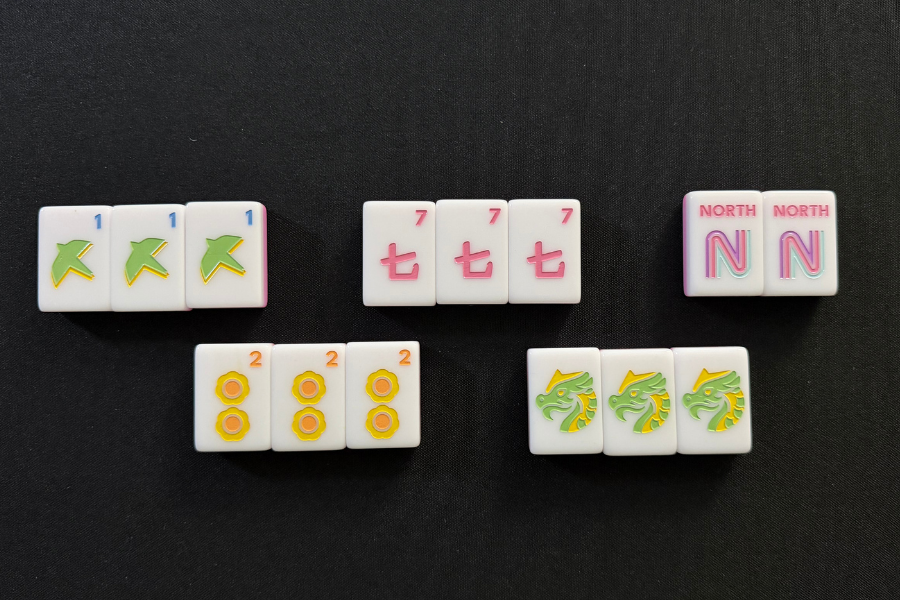
Mahjong has long been woven into the social fabric of East Asian culture. Walk through neighborhoods in Hong Kongand you’ll hear the unmistakable clatter of tiles drifting from tea houses, apartments, and community clubs.
Yet despite its immense popularity, many newcomers feel intimidated the moment they see the elaborate tile sets and lightning-fast gameplay.
The truth? Hong Kong Mahjong is surprisingly approachable once you understand the structure behind the chaos.
This guide breaks everything down step by step. From the tiles and seating arrangements to scoring, strategy, etiquette, and winning hands.
If you're completely new to Mahjong or transitioning from another variant, this article will help you learn the classic Hong Kong style with confidence.
What Is Hong Kong Mahjong?
Hong Kong Mahjong is one of the most widely played regional variations of Mahjong. Compared to Japanese Riichi Mahjong or American Mahjong, the Hong Kong version is faster, more flexible, and easier for beginners to grasp.
At its core, Mahjong is a four-player strategy game.
The objective is to build a complete legal hand before your opponents do.
A legal winning hand usually consists of:
Four melds (sets)
One pair
That sounds simple, but the strategic depth becomes apparent very quickly.
The Origins of Mahjong
Mahjong originated in China during the Qing Dynasty, though historians debate its exact birthplace and timeline. Over decades, different regions developed their own rulesets.
Hong Kong Mahjong emerged as a streamlined Cantonese version that became immensely popular during the mid-20th century. Today, it remains a staple in homes, social clubs, and tournaments across Asia and among overseas Chinese communities.
Unlike heavily rule-dependent versions, Hong Kong Mahjong prioritizes pace and accessibility while still rewarding tactical mastery.
Understanding the Mahjong Tiles
Before learning gameplay, you need to recognize the tiles.
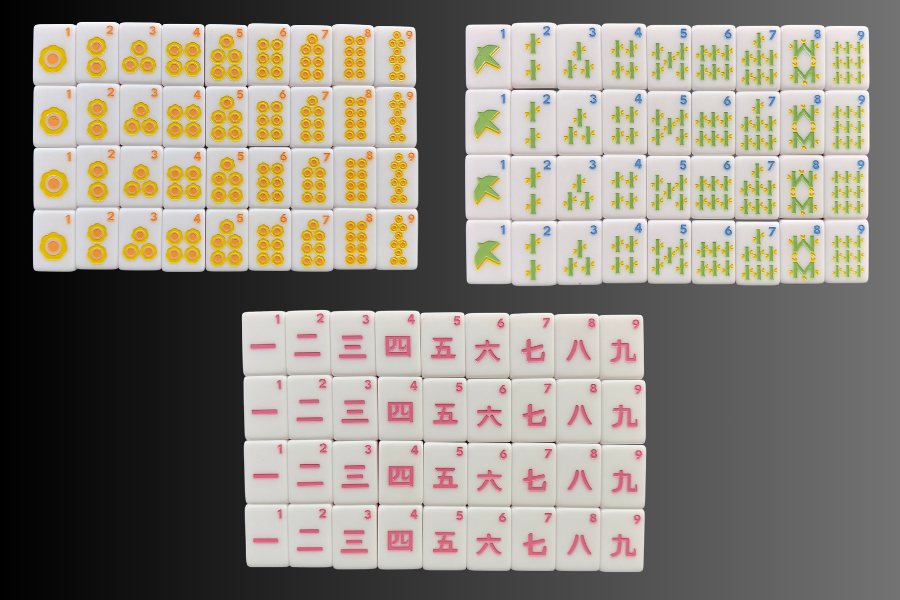
A standard Hong Kong Mahjong set contains 144 tiles.
The Three Suits
There are three numbered suits, each containing tiles numbered 1 through 9.
Dots (Circles)
These feature circular symbols.
Bamboo
These display bamboo sticks.
Characters
These contain Chinese number symbols.
Each numbered tile appears four times.
Honor Tiles
Honor tiles are not numbered.
Winds
There are four wind tiles:
East
South
West
North
Each appears four times.
Dragons
Three dragon tiles exist:
Red Dragon
Green Dragon
White Dragon
These also appear four times each.
Flowers & Seasons
Flower & Season tiles provide bonus points. They are not used in a meld.
Basic Mahjong Terminology
Learning Mahjong vocabulary dramatically speeds up the learning process.
Chow
A sequence of three consecutive numbers in the same suit.
Examples:
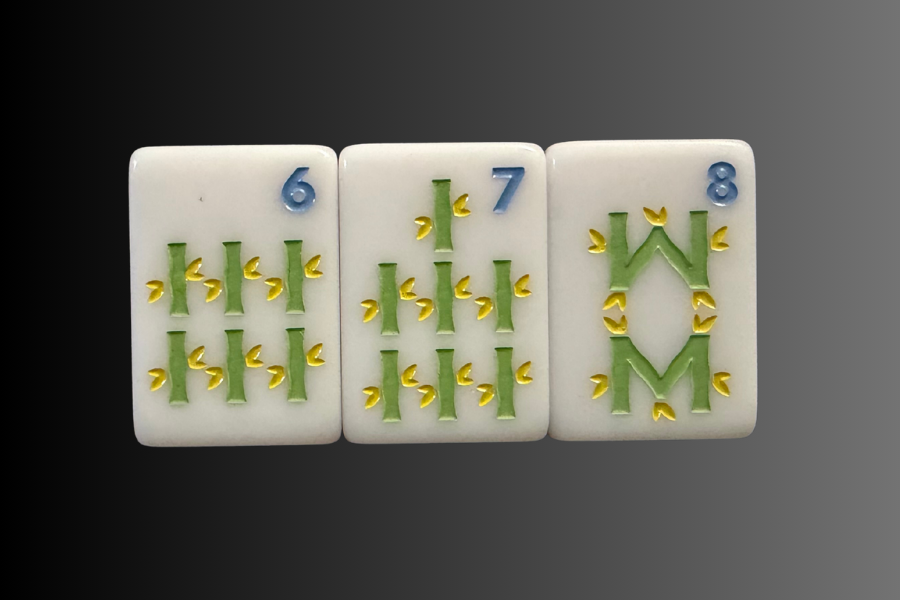
3-4-5 Bamboo
6-7-8 Dots
Pong
Three identical tiles.
Examples:
7-7-7 Characters
Red Dragon x3
Kong
Four identical tiles.
Examples:
East-East-East-East
Kongs provide bonus opportunities and often an extra draw.
Pair
Two identical tiles.
Examples:
5 Bamboo x2
White Dragon x2
Every winning hand needs exactly one pair.
Hong Kong Mahjong Video Tutorial
Setting Up the Game
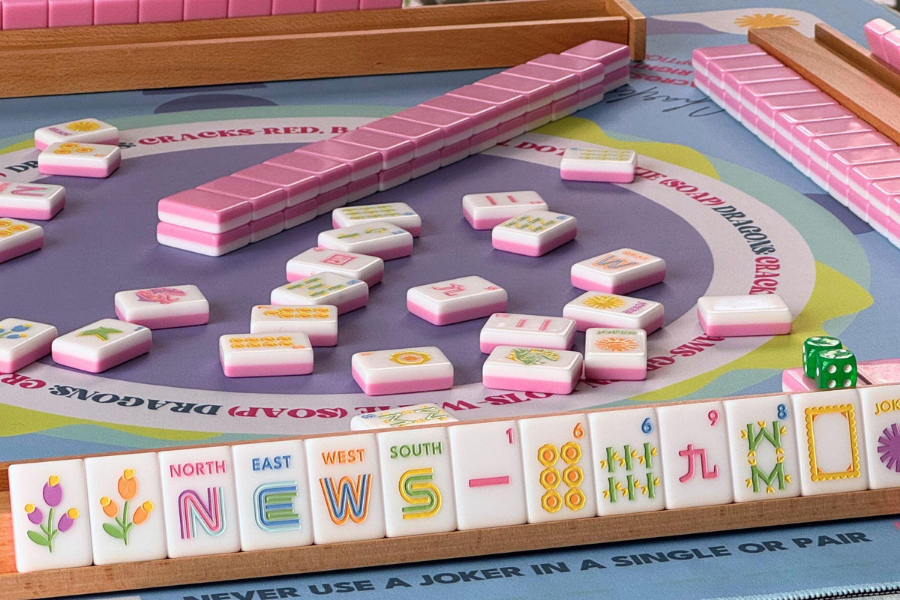
Get 15% off this Mahjong tile set with code GTG15 here
Number of Players
Hong Kong Mahjong requires four players.
Each player occupies a wind position:
East
South
West
North
The East player traditionally begins the round.
Building the Wall
All tiles are shuffled face-down.
Each player builds a wall of tiles in front of them. A wall is two tiles high and 18 tiles long. The walls combine into a square formation. This square becomes the draw pile.
Dealing Tiles
The first dealer will roll three dice. The sum of the dice indicate where the first tiles are drawn from.
First, the dealer will determine the wall to start on by counting counter clockwise starting with their own wall.
Then, the dealer will count from right to left on the wall. The four tiles after the count number are taken in by the dealer.
The player right of the dealer takes the next four tiles. This continues until all players have 12 tiles. Then, the dealer will take the top tier tile, skip one, and take the next top tier tile. The player to the right takes the next tile in line. Same for the next player, and the last player.
The dealer will end with 14 tiles. The other players will end with 13 tiles.
If any player has a flower tile at the start, it needs to be replaced. Place the flower (or season) tile face up on the table in front of them. When replacing a flower tile, a tile is drawn from the end of the wall.
The dealer begins the first turn by discarding one tile.
The Objective of the Game
Your goal is to complete a legal Mahjong hand before anyone else.
A standard winning hand contains:
4 melds (Pong, Chow, or Kong)
1 pair
How Turns Work
Gameplay rotates counterclockwise.
Each turn follows a simple structure:
Draw a tile
Evaluate your hand
Discard one tile
Claiming Discards
One of Mahjong’s defining mechanics is stealing discarded tiles. If a discarded tile is claimed to complete a meld, the meld is laid down on the table for all players to see.
Claiming a Pong
If someone discards a tile that completes three identical tiles in your hand, you may claim it immediately.
Example:
You hold:
8 Bamboo
8 Bamboo
Another player discards:
8 Bamboo
You may call:
“Pong!”
You then expose the set.
Claiming a Chow
You may only Chow from the player directly to your left.
Example:
You hold:
3 Dots
4 Dots
Left player discards:
5 Dots
You may call:
“Chow!”
Claiming a Kong
If you complete four matching tiles, you may declare a Kong.
There are multiple Kong types:
Concealed Kong
Exposed Kong
Added Kong
After declaring a Kong, draw an additional replacement tile from the end of the wall.
What Is a Concealed Hand?
A concealed hand means you have not exposed sets by claiming discards.
Concealed hands often score more points.
Many advanced players aim to remain concealed as long as possible.
Winning the Game
You win by completing a legal hand and declaring Mahjong.
A winning tile may come from:
Your own draw
Another player's discard
However, the hand must meet minimum scoring requirements.
Understanding Hong Kong Mahjong Scoring
Scoring can initially feel overwhelming, but Hong Kong Mahjong uses a relatively straightforward system.
Hands earn:
Fan points (multipliers)
Most games require:
3 Fan minimum
House rules vary widely.
Check out this table for all the ways to score fan points.
Common 1-Fan Hands
All Chows - Your hand contains only sequences.
Seat Wind Pong - A Pong matching your seat wind.
Dragon Pong - A Pong of dragon tiles.
Self-Draw Win - Winning using your own drawn tile.
No Flowers - Having no flower tiles gives a bonus.
Higher-Value Hands
All Pongs - Every meld is a Pong or Kong.
Full Flush - All tiles come from one suit only.
Half Flush - One suit plus honor tiles.
Concealed Hand - No exposed melds.
Big Dragons - Three dragon Pongs.
These hands dramatically increase scoring.
Dealer Rotation
If a winning hand is completed by the dealer, that player remains the dealer.
If a winning hand is completed by a player other than the dealer, the dealer will move to the next player on the right.
The east seat is always the dealer. Then, going counter clockwise to the right its South, then West, then North.
The round wind always starts with East. The round wind stays as East until all players have had a chance to be the East seat as dealer.
When the East seat returns to the first dealer, the round wind changes to South. This continues into the West round and finally the North round.
The player with the most game points at the end wins!
Mahjong Table Etiquette
Mahjong is deeply social. Good etiquette matters.
Avoid Slow Play
Think ahead during opponents’ turns.
Announce Clearly
Say:
Pong
Chow
Kong
Mahjong
loudly and confidently.
Keep Tiles Organized
Messy racks slow down the game.
Don’t Reveal Frustration
Mahjong rewards emotional control.
Experienced players rarely show reactions.
Beginner Strategy Tips
New players often focus solely on completing any hand possible. Strong Mahjong players think several turns ahead.
Here are foundational strategic concepts.
1. Prioritize Flexible Hands
Avoid committing too early.
Hands with multiple possible developments are stronger.
Example:
Holding:
3-4 Bamboo
6-7 Bamboo
gives more draw flexibility than isolated tiles.
2. Value Efficiency Over Beauty
A flashy hand means nothing if another player wins first.
Fast hands frequently outperform greedy ones.
3. Watch Opponent Discards
Discards reveal information.
If someone throws many Bamboo tiles, they likely aren’t collecting Bamboo.
This helps estimate safe discards.
4. Learn Defensive Play
Mahjong is not purely offensive.
Sometimes survival matters more than winning.
If an opponent appears close to Mahjong avoid risky discards
5. Memorize Dead Tiles
Dead tiles are tiles already discarded or exposed.
Tracking them improves probability calculations.
Reading Opponents
Advanced Mahjong becomes psychological warfare.
Observe:
Speed of discards
Hesitation
Claimed sets
Suit patterns
Example:
A player rapidly discarding Dots while claiming Bamboo melds likely pursues a Bamboo-heavy hand.
Common Beginner Mistakes
Breaking Completed Melds
New players sometimes dismantle valid combinations chasing ambitious hands.
This often backfires.
Ignoring Defense
Aggressive players frequently feed opponents winning tiles.
Holding Honors Too Long
Unpaired honor tiles become liabilities late in the game.
Calling Too Many Tiles
Exposed hands reduce flexibility and reveal strategy.
Sometimes staying concealed is smarter.
Differences Between Hong Kong Mahjong and Other Variants
Understanding distinctions helps avoid confusion.
Hong Kong vs Japanese Riichi Mahjong
Japanese Riichi includes:
Riichi declarations
Dora bonuses
Furiten rules
Hong Kong Mahjong is generally simpler and faster.
Hong Kong vs American Mahjong
American Mahjong uses:
Joker tiles
Official card hands
Charleston passing
Hong Kong Mahjong uses traditional structure.
Hong Kong vs Taiwanese Mahjong
Taiwanese Mahjong often uses:
16-tile hands
More complex scoring
Hong Kong Mahjong typically uses:
13-tile hands
Gather Together with Hong Kong Mahjong
Learning how to play Hong Kong Mahjong may seem intimidating at first glance, yet the game becomes deeply rewarding once the fundamentals click into place.
The beauty of Hong Kong Mahjong comes from this balance between simplicity and endless tactical depth.
At beginner level, you’ll celebrate merely completing a hand.
Later, you’ll analyze:
opponent tendencies
tile flow
risk management
scoring optimization
And that evolution is precisely why Mahjong has endured for generations.
So shuffle the tiles, build the walls, and start playing. The fastest way to understand Mahjong is not by memorizing every rule but by sitting down at the table and experiencing the rhythm of the game firsthand.