How To Play Narde | Backgammon Variant
If you enjoy backgammon but want to explore one of its oldest and most strategic relatives, Narde is an excellent game to learn.
Originating centuries ago and popular throughout Eastern Europe, Russia, Turkey, and parts of the Caucasus and Central Asia, Narde offers a fascinating twist on traditional backgammon.
While it shares the same board and equipment, its rules create an entirely different style of play that rewards careful planning over aggressive hitting.
Unlike standard backgammon, where knocking opponents off the board is a central tactic, Narde focuses on positioning, blocking, and racing.
The inability to hit opposing checkers transforms every decision into a long-term strategic puzzle, making the game both approachable for newcomers and deeply rewarding for experienced players.
This guide explains everything you need to know about how to play Narde.
What Is Narde?
Narde is an ancient board game belonging to the backgammon family. Historians believe its origins stretch back over a thousand years, with variations played throughout Persia and neighboring regions before spreading across Europe and Asia.
Modern Narde uses the familiar 24-point board, fifteen checkers per player, and two six-sided dice. However, several rule changes dramatically alter gameplay:
Players cannot hit or capture opposing pieces.
Both players move in the same direction around the board.
Blocking becomes the primary defensive weapon.
Strategic positioning outweighs tactical attacks.
Races often develop much earlier than in standard backgammon.
The result is a game that rewards foresight, efficiency, and calculated movement rather than confrontation.
Narde Video Tutorial
Equipment Needed
To play Narde, you'll need:
One standard backgammon board with 24 points
15 light-colored checkers
15 dark-colored checkers
Two six-sided dice
The same equipment used for regular backgammon works perfectly for Narde.
Setting Up the Board
At the beginning of the game:
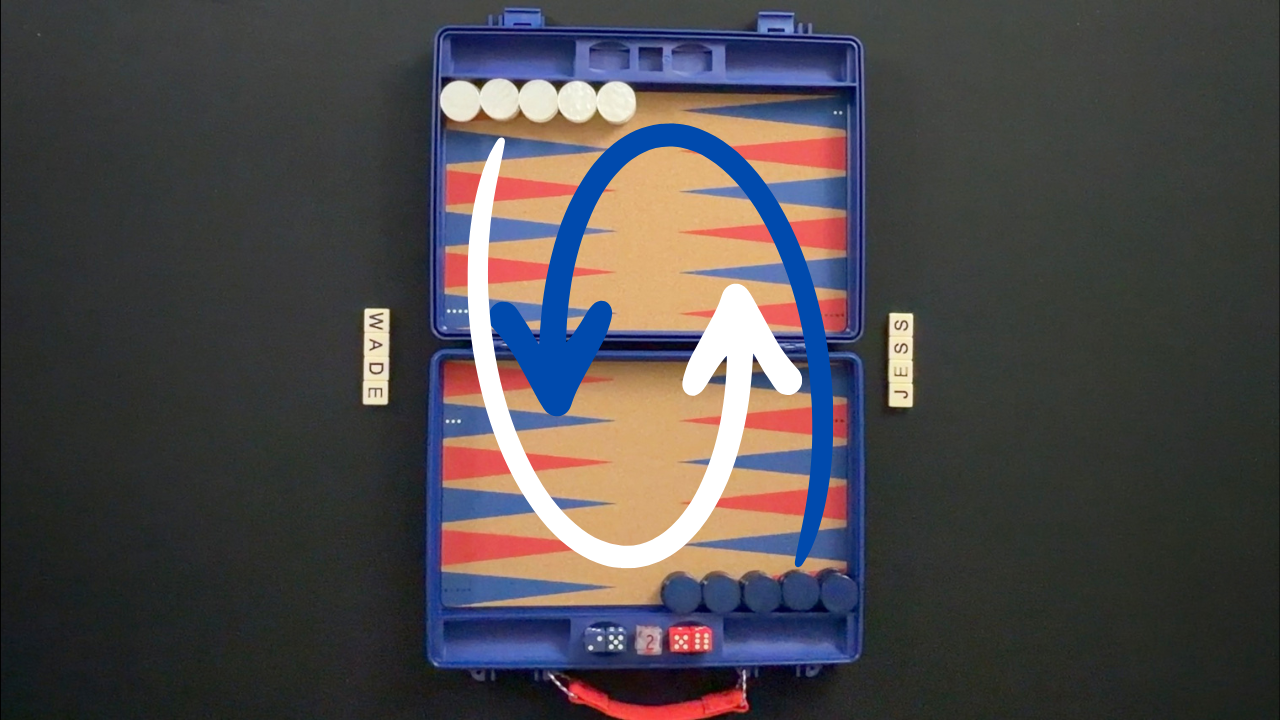
Each player places all 15 checkers on their starting point.
The starting positions are directly opposite one another.
Both players travel around the board in the same direction rather than toward each other.
Unlike standard backgammon, the players' paths never cross head-on, eliminating opportunities for captures.
The objective remains simple:
Move all fifteen checkers around the board and bear them off before your opponent does.
Understanding Movement
Each turn begins by rolling two dice.
Players may:
Move one checker the total of both dice separately.
Move two different checkers.
Use both dice whenever legally possible.
For example:
If you roll a 3 and a 5, you may:
Move one checker three spaces and another five spaces.
Move one checker eight spaces by making separate legal moves of three then five.
Every movement must land on an open point.
Occupying Points
A point becomes yours as soon as one of your checkers occupies it.
You may stack multiple checkers on a single point without restriction.
However, because hitting is not allowed, occupied points create permanent obstacles until vacated.
This makes building walls one of the most important strategic concepts in Narde.
The No-Hitting Rule
Perhaps the biggest difference between Narde and standard backgammon is this:
You cannot land on a point occupied by your opponent.
Unlike backgammon:
No checker is ever sent to the bar.
No re-entry exists.
Pieces remain safe throughout the game.
Blocking replaces attacking.
This single rule fundamentally changes strategy.
Instead of looking for opportunities to hit vulnerable blots, players focus on controlling territory and restricting movement.
Creating Blocks
A player may occupy consecutive points to create barriers.
For example:
If you control six consecutive points, your opponent cannot pass through that section unless they already have pieces beyond it.
However, traditional Narde includes an important restriction:
You cannot completely trap every opposing checker behind an impenetrable wall if none of their pieces have advanced beyond your blockade. At least one legal route must always remain available until the opponent has progressed.
This rule prevents unfair deadlocks while preserving strategic blocking.
Rolling Doubles
Rolling doubles gives a player four moves instead of two.
For example:
Double 2s = four moves of two spaces
Double 5s = four moves of five spaces
Double 6s = four moves of six spaces
Players must use as many moves as legally possible.
Strong double rolls can dramatically accelerate development or strengthen defensive formations.
Bearing Off
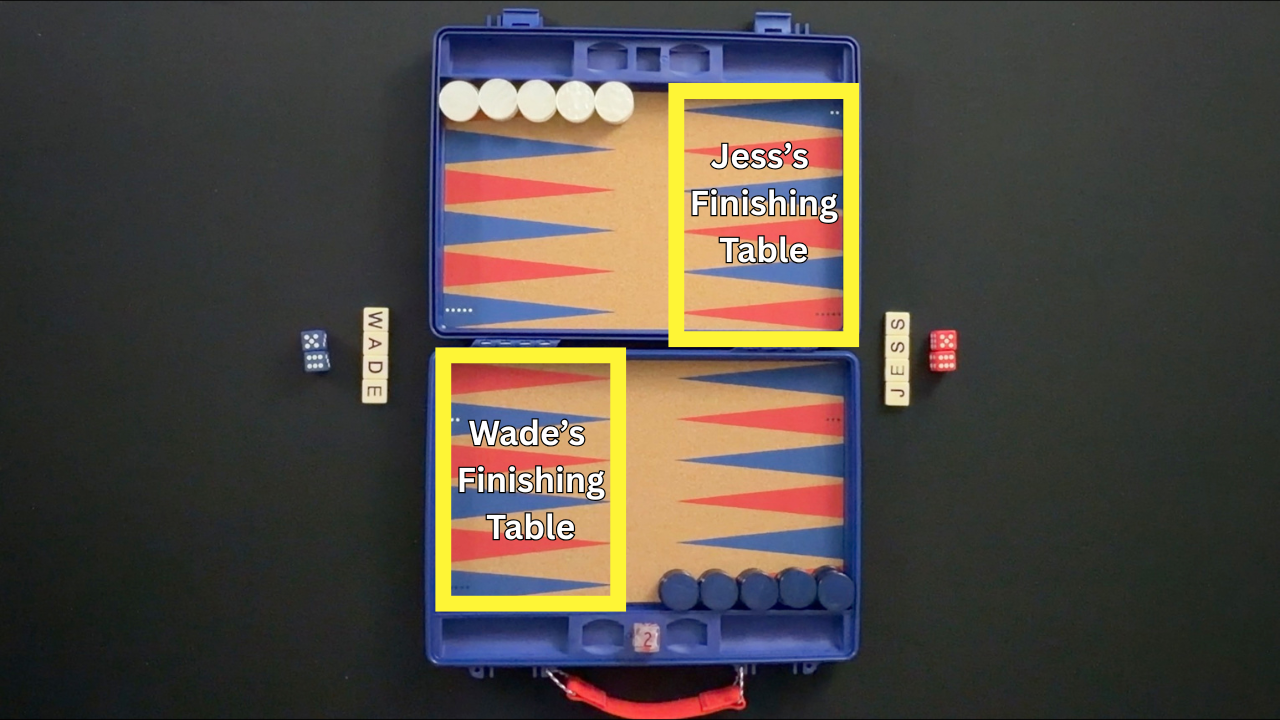
Once all fifteen checkers have entered your home board, bearing off begins.
To bear off:
Roll the exact number needed to remove a checker.
If no checker occupies the corresponding point, move a checker from a higher point if possible.
If no higher checker exists, bear off the checker from the highest occupied point.
For example:
If your highest checker sits on the 4-point and you roll a 6, that checker may be removed.
The first player to bear off all fifteen checkers wins the game.
Opening Strategy for Beginners
The first few turns often determine the pace of the entire match.
Strong opening principles include:
Spread Your Checkers
Avoid stacking too many pieces on one point early.
Develop multiple checkers to increase flexibility.
Build Connected Positions
Create chains of occupied points that support one another.
Connected formations provide mobility while restricting your opponent.
Avoid Isolated Pieces
Single advanced checkers may become trapped behind enemy blocks.
Keep your formation cohesive whenever possible.
Think Several Turns Ahead
Since no captures occur, every move has lasting consequences.
Positioning mistakes can remain problematic for many turns.
Midgame Strategy
Once both players have developed across the board, Narde becomes a battle of efficiency.
Key priorities include:
Construct Defensive Walls
Groups of consecutive occupied points can slow your opponent dramatically.
Even two or three connected points may force awkward rerouting.
Preserve Flexibility
Leaving yourself multiple legal moves prevents difficult situations when awkward dice rolls appear.
Over-concentrating checkers often limits future options.
Watch the Race
Because there is no hitting, pip count matters enormously.
Constantly compare your total distance remaining with your opponent's.
If ahead, prioritize speed.
If behind, focus on slowing your opponent through intelligent blocking.
Endgame Tactics
During bearing off:
Remove checkers efficiently.
Avoid leaving distant stragglers.
Minimize wasted high rolls.
Keep your highest points populated until needed.
Excellent bear-off technique frequently determines close games.
Common Beginner Mistakes
Creating Giant Stacks
Many new players pile numerous checkers onto one point.
This reduces mobility and creates bottlenecks.
Ignoring Blocking Opportunities
Small walls can delay opponents by multiple turns.
Never underestimate positional control.
Advancing Too Quickly
Rushing individual checkers far ahead often leaves them stranded behind future blockades.
Balanced development usually produces better results.
Poor Home Board Organization
Disorganized checkers during the final phase lead to inefficient bearing off.
Keep your home board orderly throughout the game.
Advanced Strategic Concepts
Experienced Narde players often think in terms of tempo rather than immediate gains.
Every move should improve one or more of the following:
Board control
Checker distribution
Future flexibility
Blocking potential
Race advantage
Since checkers are never removed through captures, positional advantages accumulate steadily throughout the game.
This makes long-term planning significantly more valuable than short tactical ideas.
Why Narde Is Worth Learning
Narde offers a refreshing alternative for players who appreciate thoughtful strategy over constant confrontation.
The absence of captures shifts the focus toward planning several moves ahead, creating elegant positional battles where every checker placement matters. Games often become contests of efficiency, timing, and subtle maneuvering rather than luck alone.
For chess enthusiasts, puzzle solvers, and traditional backgammon players seeking a new challenge, Narde provides an engaging experience that rewards patience and strategic discipline.
Gather Together with Narde
Learning how to play Narde is surprisingly easy, but mastering it can take years. While the rules differ only slightly from backgammon, those changes create an entirely unique game built around foresight, structure, and precision.
Beginners should focus first on understanding movement and blocking before worrying about advanced tactics. As experience grows, recognizing opportunities to control space and optimize checker placement becomes second nature.
The beauty of Narde lies in its elegant simplicity. With no captures to rescue poor positioning or punish risky plays, every move contributes to the larger strategic picture. Master those fundamentals, and you'll discover why this centuries-old backgammon variant continues to captivate players around the world.