5 Simple Ways to Make Family Time Feel Less Forced
Picture this: the clock hits 6 PM. Everyone’s home, the dinner plates are stacked, and there’s a vague, lingering thought: Shouldn’t we be spending some “quality family time” now?
But instead of joy and connection, there's hesitation. Maybe one kid is glued to their screen, another already disappeared into their room, and you're teetering between exhaustion and guilt, wondering why something so natural, family togetherness, feels so awkward.
You're not alone.
In a world overscheduled and overstimulated, where our attention is split into digital fragments and our calendars resemble battle plans, family bonding often gets crammed into narrow, high-pressure slots. And when it doesn’t go smoothly, we start to question ourselves: Are we doing something wrong?
Here’s the good news: you’re not.
It’s not a flaw in your intentions, it’s a misalignment in approach. The traditional notion of "family time" has become a lofty goalpost, often requiring more planning, energy, or enthusiasm than anyone has left by day’s end.
The fix? Simpler than you think.
With a few subtle recalibrations, you can transform together-time from stiff and strained to something organic, enjoyable, and even, dare we say, eagerly anticipated.
Let’s explore five easy shifts that dissolve the pressure and revive the joy.
1. Redefine “Quality Time” - The Magic Lies in the Mundane
We’ve been conditioned to believe that quality time must be profound, memorable, and perhaps even Instagram-worthy. A special trip. A big conversation. A craft project that lasts three hours and ends in glitter explosions and frustration.
Let’s throw that myth out the window.
The truth? Pressure is the enemy of connection.
If you enter a moment expecting it to feel magical, you're likely to be disappointed. Connection happens in the in-between: that five-minute detour at the grocery store when your child says something unexpectedly honest, or the shared silence on the couch as you both scroll through your phones but sit close.
The best family memories often aren’t made, they’re noticed.
So lower the bar. Not in quality, in expectation.
If your day includes a few minutes of shared laughter, eye contact, or just being present without a screen between you, that counts.
Consistency, not intensity, grows connection.
Think of family connection like compound interest: small, regular deposits yield big results over time.
Try This:
Set a 5-minute “pause” timer after dinner. Sit together. No agenda.
Greet your kids when they wake up or get home, no multitasking.
Share one “high” and “low” from your day while brushing teeth.

2. Don’t Force Conversations - Create Moments Around Them
Raise your hand if you’ve ever tried the classic:
"So… how was your day?"
Cue the infamous shoulder shrug, eye roll, or monosyllabic “fine.”
It’s not that your kids (or partner) don't want to talk. It’s that talking-on-command feels unnatural, especially when it puts them in the hot seat. Eye contact across a dinner table can sometimes feel like an interrogation, even with good intentions.
Here’s a powerful reframe: conversation flourishes when it’s not the main event.
That’s where side-by-side activities come in. When your hands are busy (stacking blocks, mixing batter, tossing a ball) your brain relaxes. The pressure to perform socially dissolves.
Games are golden. They offer structure, rhythm, and a natural cadence for dialogue to sneak in without being forced.
Think of it as giving your words somewhere to land between dice rolls and card flips.
Try This:
Play Uno or a dice game while dinner finishes.
Do a puzzle with low-stakes conversation in the background.
Draw or color together, no skill required.
Conversations that start accidentally often go further than those that are scheduled.
3. Choose Family Activities with Boundaries (Start, End, and Exit Plan)
One of the reasons “family time” gets quietly avoided or resisted? It feels like a trap.
You say, “Let’s hang out tonight!” and suddenly, everyone panics: How long is this going to take? What if it’s boring? What if I can’t leave?
This is especially true for kids and teens who thrive on knowing the edges of things. Open-ended plans create anticipatory anxiety, even if it's subconscious.
Solution? Choose activities with clear beginnings and endings.
Games, challenges, or time-boxed tasks make things feel safe. Everyone knows what to expect and how long it’ll last.
“One round of Connect Four” is way more approachable than “let’s spend time together.”
This structure reduces resistance and increases willingness. When family time doesn’t feel endless, it feels manageable. And when it’s manageable, it’s repeatable.
Try This:
Pick a 10-minute game and say it clearly: “Just one round.”
Use a timer: “We’re doing this together for 7 minutes, then back to whatever.”
Create a “Quick Win” jar with slips like “Play charades (1 round)” or “Guess the animal (3 questions).”
Predictability invites participation.
No Time? No Problem. These 3 Games Take 5 Minutes or Less
You don’t need hours or elaborate setups to bond. I’ve compiled three of my favorite low-effort, high-connection games that require zero prep and zero materials.
Click here to download your free guide
Fast-paced, silly, and stress-free
Perfect for tired evenings or short windows
4. Prioritize Play Over Meaning: Let Laughter Lead the Way
We often enter family time with noble intentions. Let’s make a memory. Let’s get closer. Let’s talk about values.
But ironically, chasing depth often chokes it.
Connection, like trust, is something that grows indirectly. And one of the fastest shortcuts to both? Shared laughter.
Laughter drops walls. It melts tension. It reminds everyone, including you, that home is a place of lightness, not just lessons.
Fun isn’t frivolous. It’s the foundation of emotional safety.
When your kids laugh with you, they remember you as safe. And that memory makes the deeper conversations easier when they matter most.
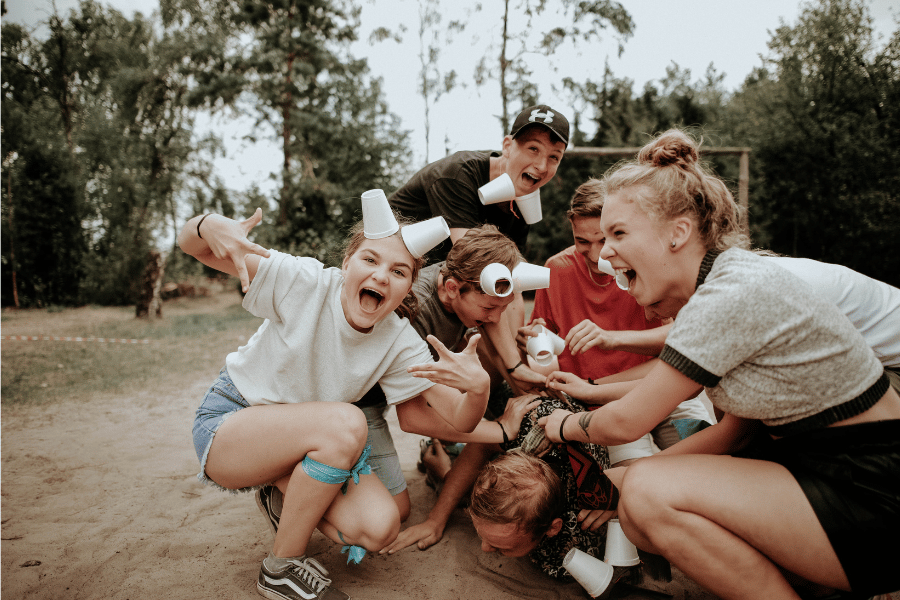
Play (especially physical, spontaneous, or silly play) helps reset the family mood. You don’t need a plan. You just need the willingness to look ridiculous.
Try This:
Have a 2-minute dance party before dinner.
Make up terrible rhymes or jokes in the car.
Start a game of “Would You Rather?” at breakfast.
When you let joy take the lead, meaning follows naturally in its footsteps.
5. Repeat What Works: Create Familiarity, Not Novelty
There’s a common parenting pitfall: the belief that we must constantly invent new ways to connect. New games, new outings, new themes, new recipes.
While novelty has its place, what actually cements connection is ritual.
Ritual doesn’t mean rigid routine. It means having something familiar and beloved enough to repeat.
Kids, especially, thrive on repetition. That “same old game” you’re tired of? They may secretly love it precisely because they know what to expect and feel competent playing it.
Repetition also eliminates decision fatigue, a major blocker for tired parents.
When you’ve got a go-to 10-minute game, a favorite walk route, or a nightly silly question, it’s one less choice to make, and one more opportunity to bond effortlessly.
Comfort comes from the known. Don’t chase novelty, build tradition.
Try This:
Pick one game to be your “default” for the week.
Make Friday night “silly game night”, same time, same place.
Create a shared playlist you always play during clean-up.
You don’t need more ideas, you need a few reliable favorites.
From Forced to Flowing: Making Family Time a Natural Rhythm
What if family time didn’t feel like one more thing to check off the list?
What if, instead, it flowed into your day with ease. Five minutes here, a shared laugh there, a game that’s almost automatic?
It’s not just possible, it’s sustainable.
When you shift away from grand gestures and lean into low-stakes, joyful repetition, connection becomes the default, not the exception.
Start small. Pick just one idea from this list to try this week. No overthinking, no perfectionism.
Because at the end of the day, the best family moments aren’t the ones we plan meticulously. They’re the ones that happen because we created just enough space for them to unfold.
TLDR: Small Shifts, Big Impact
Lower the bar: 5 minutes counts.
Stop chasing deep talks: Focus on being together.
Use structure: Defined beginnings and ends lower resistance.
Let fun lead: Play is powerful.
Repeat what works: Ritual beats novelty.
Want a Simple Plan for This?
If you’d like a gentle, day-by-day way to build these kinds of moments into your family life, I created the 30-Day Quality Time Blueprint. A collection of short, simple games and activities designed to help families connect one small step at a time.