15 Fun Family Games for Your Next Game Night
Family game night doesn't have to mean pulling the same game off the shelf every time.
Some of my favorite memories from family gatherings involve games. We had certain games that seemed to come out again and again like Spoons, Golf, Farkle, Mexican Train, Sequence, and plenty more.
But the best game for one family or one night isn't necessarily the best game for another. Sometimes you need something younger kids can play. Other times you want a game that's more strategic, works with a big group, or gets everyone laughing.
So instead of simply ranking my favorite family games, I've put together 15 fun family games for different situations. Hopefully, you'll find a few familiar favorites and a few new games to try at your next family game night.
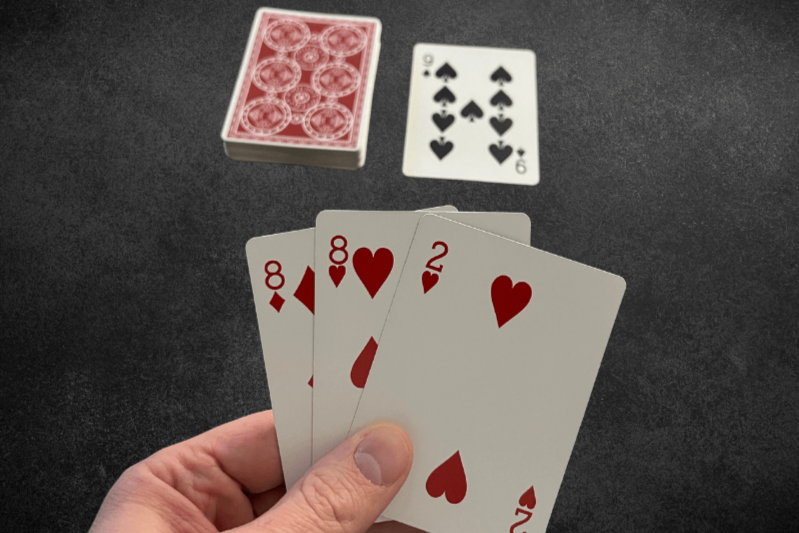
1. Crazy Eights - Best When Younger Kids Want to Play
Players: 2–7
You'll need: Standard deck of cards
Crazy Eights is a great choice when you need a game that's simple enough for younger players but still enjoyable for the rest of the family.
Players take turns matching either the suit or rank of the card on top of the discard pile. Eights are wild and can be played at any time, allowing the player to choose the suit that continues play.
The goal is simply to be the first player to get rid of all the cards in your hand.
If your kids have played UNO, much of Crazy Eights will feel familiar and all you need is a regular deck of cards.
Learn How to Play Crazy Eights
2. Swoop - Best for Teens and Adults
Players: 3–8
You'll need: Multiple decks of playing cards
If everyone at the table is ready for something a little more competitive, try Swoop.
The goal is to get rid of all the cards in your hand and in the piles in front of you. Players take turns playing matching cards onto a central pile, with certain plays clearing, or "swooping", the pile.
There's some luck involved, but deciding which cards to play and which piles to uncover gives you plenty to think about.
It's especially good for families looking for a card game that's a step beyond the classics they already know.
3. Hearts - Best When You Have Four Players
Players: 4 is ideal
You'll need: Standard deck of cards
Have exactly four people? Hearts is one of the classic card games worth knowing.
Unlike many trick-taking games, the goal isn't to collect tricks. You're usually trying to avoid them, especially tricks containing hearts and the Queen of Spades.
That creates an interesting dynamic where winning a trick can sometimes be the last thing you want to do.
There's enough strategy to reward repeated play, but you don't need any special equipment. Once everyone knows the rules, Hearts is an easy game to return to again and again.
4. Empire - Best for a Large Family Gathering
Players: Best with a larger group
You'll need: Slips of paper, something to write with, and a bowl
When you've got a house full of people, Empire is one of my favorite games to recommend.
Everyone secretly chooses a word within an agreed-upon category. The words are read aloud, and then players try to figure out who chose each one.
Guess correctly and that player joins your "Empire." As the game continues, small teams gradually grow into larger ones until everyone has been absorbed into one final empire.
It combines memory, deduction, teamwork, and plenty of conversation, and it's especially good for a mixed-age group.
5. Telephone Pictionary - Best for Lots of Laughs
Players: 4 or more
You'll need: Paper and pencils
If the main goal is to get everyone laughing, you don't need an elaborate game.
Telephone Pictionary combines the classic games of Telephone and Pictionary. Players alternate between writing a phrase and drawing what the previous person wrote. The next person has to interpret the drawing, the person after that draws the new interpretation, and so on.
By the time everything makes its way around the table, the original phrase can turn into something completely different.
Artistic talent is definitely not required. In fact, questionable drawings usually make the game better.
6. Peanuts - Best for a Competitive Family
Players: 2 or more
You'll need: One deck of cards per player
Some families like a relaxing game night.
Others want to win.
If your family falls into the second category, try Peanuts.
Everyone plays at the same time, racing to move cards from their own layout onto shared piles in the middle of the table. Because there are no turns, the game can get fast and chaotic very quickly.
Speed matters, but so does paying attention to what's happening across the table.
If your family enjoys games that get everyone's competitive side going, this is a good one to know.
7. Golf - Best for a Relaxed Game
Players: 2 or more
You'll need: Playing cards
Not every game night needs to be loud and frantic.
Golf is a good choice when you want something more relaxed. Players arrange cards face down in front of themselves and gradually swap them out while trying to finish with the lowest score.
Part of the fun comes from deciding whether to keep the cards you have or take a chance on something better.
The basic gameplay is easy to settle into, making Golf a nice option when the goal is to play a game while still having plenty of time to talk around the table.
8. Farkle - Best When You Want to Push Your Luck
Players: 2 or more
You'll need: Six dice
Farkle gives you the decision every good push-your-luck game needs:
Do you take the points you've already earned, or risk them for a chance at more?
On your turn, you roll six dice and set aside scoring dice. As long as you keep scoring, you can continue rolling the remaining dice to build a bigger total.
But if you roll and can't score anything, you Farkle and lose the unbanked points from that turn.
The rules are approachable, turns move quickly, and a big roll can change the game in a hurry.
9. Mexican Train Dominoes - Best When You Want a Domino Game
Players: 2 or more
You'll need: Double-12 domino set
Mexican Train is one of those games that can bring several generations around the same table.
Each player works to play dominoes onto their own train while everyone can also play on the shared Mexican Train. Your goal is to get rid of your dominoes while keeping the value of anything left in your hand as low as possible.
There's a little more setup and explanation involved than some of the games on this list, but once everyone understands how the trains work, the game is easy to follow.
It's a great change of pace when you want to put the playing cards away.
Learn How to Play Mexican Train Dominoes
10. Azul - Best When You Want More Strategy
Players: 2–4
You'll need: Azul
If your family enjoys thinking a few moves ahead, Azul adds more strategy to game night without requiring an especially long or complicated game.
Players take turns selecting colorful tiles and adding them to their boards to complete patterns and score points. The tiles you choose matter but so do the tiles you leave behind for everyone else.
That means you're balancing your own plans against what your opponents might need.
The colorful tiles also give Azul a great table presence, making it an inviting step into more strategic modern board games.
11. Sequence - Best for Playing in Teams
Players: 2–12
You'll need: Sequence
Sequence combines cards with a game board in a way that's easy for a wide range of ages to understand.
Play a card from your hand, then place a chip on the matching space on the board. Your goal is to create a sequence of five chips in a row.
It's especially good for family game night because you can divide into teams, allowing more people to play without making the game overly complicated.
There's strategy involved in building your own sequences and blocking your opponents, but the basic turn is simple enough that new players can get comfortable quickly.
12. 99 - Best When You Only Have a Few Minutes
Players: 2 or more
You'll need: Standard deck of cards
Sometimes you want to play something, but nobody wants to commit to a long game.
That's where 99 comes in.
Players take turns playing cards and adjusting a running total while trying not to push that total above 99. Certain cards have special effects that can help you escape a difficult situation.
It's quick to explain, requires nothing more than a standard deck, and still gives players some decisions to make as the total gets dangerously close to 99.
13. Qwixx - Best for Keeping Everyone Involved
Players: 2–5
You'll need: Qwixx
One of my favorite things about Qwixx is that you don't completely check out when someone else takes a turn.
The active player rolls the dice, but everyone has an opportunity to use part of the result. That keeps the entire table watching each roll and thinking about what to mark on their score sheet.
The goal is to cross off numbers strategically while working your way through four colored rows.
It's easy to learn, moves quickly, and avoids a lot of the downtime you get in some family games.
14. Outfoxed! - Best When You Want to Work Together
Players: 2–4
You'll need: Outfoxed!
Not every family game needs to end with one person beating everyone else.
In Outfoxed!, everyone works together to solve a mystery before the fox escapes.
Players search for clues, eliminate suspects, and try to determine which fox stole Mrs. Plumpert's prized pot pie.
The cooperative format makes it particularly nice for families with younger children. Instead of parents and kids competing against each other, everyone gets to discuss clues and make decisions as a team.
It's a great option when you want game night to feel collaborative rather than competitive.
15. Rummikub - Best When You Want a Tile Game
Players: 2–4
You'll need: Rummikub
Rummikub is a classic family game that combines some of the ideas of rummy with numbered tiles.
Players try to get rid of their tiles by creating groups of matching numbers or runs of consecutive numbers in the same color.
Where things get especially interesting is that combinations already on the table can be rearranged as long as everything still forms valid sets when you're finished.
That opens up possibilities for clever turns that aren't always obvious at first glance.
If your family enjoys card games like rummy but wants something different on the table, Rummikub is an excellent choice.
How to Choose the Right Game for Your Family
You don't need the "best" family game. You need the right game for the people sitting around the table that night.
If younger kids are joining you, start with something approachable like Crazy Eights. If everyone's feeling competitive, bring out Peanuts. Have a big group? Try Empire. Want something strategic? Azul might be the better choice. And if everyone would rather work together, give Outfoxed! a try.
The important part isn't which game you choose.
It's getting everyone around the table.
Hopefully, this list gives you a few new ideas for your next family game night and maybe one of them will become a game your family keeps coming back to for years.